What Is a Robo-Advisor? How Automated Investing Works (and When It Makes Sense)
A robo-advisor can build and manage a diversified portfolio for you automatically. Learn how the algorithm works, what you actually pay for, and who benefits most from hands-off investing.
A robo-advisor is designed for one job: make investing simple and consistent. Instead of picking stocks, you answer a short questionnaire and the platform builds a diversified portfolio—usually a mix of low-cost ETFs—then manages it automatically.
For many people, that “boring automation” is exactly what produces better results.
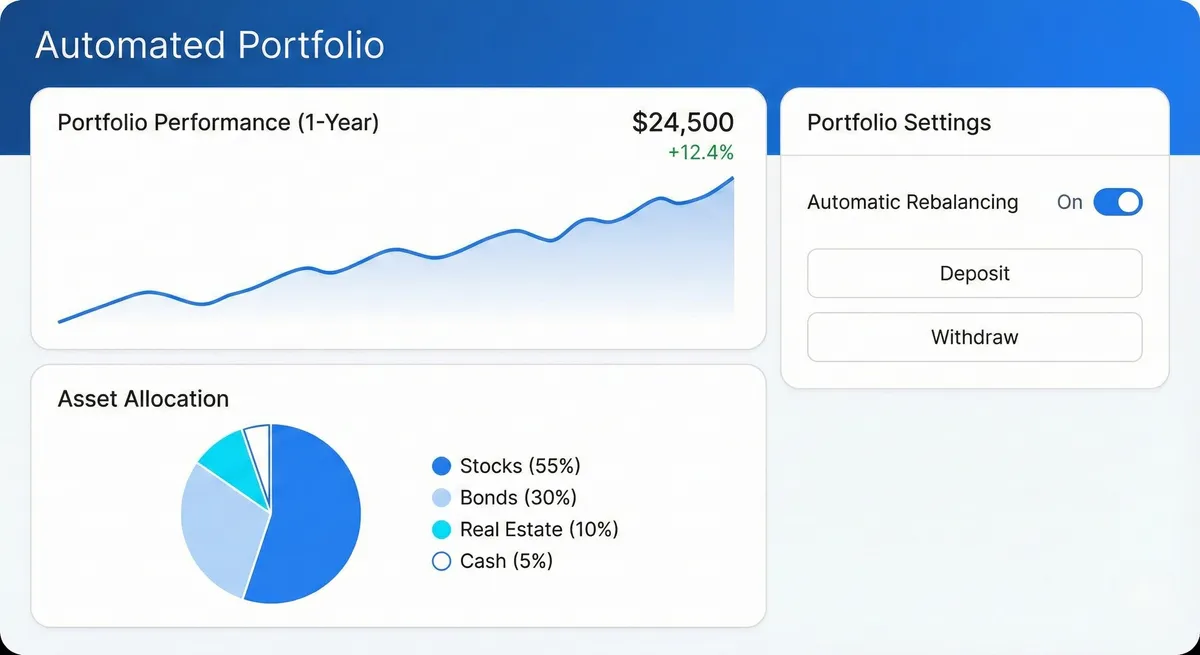
How robo-advisors work (in plain English)
Most robo-advisors follow a predictable system:
Risk questionnaire
You answer questions about time horizon, goals, and risk tolerance.Portfolio construction
The platform assigns you an allocation (example: 80% stocks / 20% bonds) using diversified ETFs.Automation engine
It handles rebalancing, dividend reinvestment, and ongoing monitoring.Ongoing adjustments
Some robos also adapt your allocation as your goal date approaches.
What you’re paying for
Robo-advisor costs usually fall into two buckets:
1) Advisory fee
A small annual percentage of assets (often stated as “0.xx% per year”).
2) Fund expense ratios
ETFs inside the portfolio have their own built-in costs. You don’t get a separate bill—but they reduce returns over time.
Core features you should look for
A strong robo-advisor typically includes:
- Automatic rebalancing (keeps your risk aligned)
- Dividend reinvestment
- Goal tracking (retirement, home purchase, education)
- Automatic deposits / recurring contributions
- Tax features (depending on account type and platform)
When a robo-advisor is a great fit
Robo-advisors shine for people who want:
- A long-term plan without complexity
- A diversified ETF portfolio without manual work
- Automation that reduces emotional decisions
- A “set it and keep going” system
If you frequently panic-sell or chase trends, automation can be a performance advantage.
When a robo-advisor may NOT be ideal
You may prefer DIY (or human advice) if:
- You want advanced strategies (options, factor tilts, direct indexing)
- You need highly customized tax planning
- You have complex financial goals or business income
- You prefer full control over holdings and timing
A simple mental model
Think of a robo-advisor as an autopilot for diversified investing:
- Not the fastest for every scenario
- But extremely good at avoiding the most common mistakes