Is Your Online Broker Safe? SIPC vs. FDIC, Account Protection, and Simple Verification Steps
Brokers are regulated—but many investors misunderstand what’s protected. Learn SIPC vs. FDIC, what happens if a broker fails, and the practical steps to verify a platform before you deposit.
Safety is not a feature—it’s the foundation. Before you fund a brokerage account, you should understand what protections exist and what they do (and do not) cover.
Market risk vs. broker risk (two different things)
- Market risk: Your investments can go down. No insurance protects you from normal market losses.
- Broker risk: The firm fails operationally or financially and customer assets are missing. This is where protections matter.
What SIPC is (and what it isn’t)
SIPC protection is designed to help return customer property (cash and securities) if a brokerage fails and assets are missing.
SIPC is not protection against a stock dropping 30%.
What FDIC is (and why it’s different)
FDIC protection applies to bank deposits at insured banks. Some brokers offer a “cash sweep” program that moves idle cash to partner banks—this can change how cash is protected depending on the setup.
Why regulation matters
A reputable broker typically operates under U.S. securities regulation and industry oversight. What this usually means for you:
- Required disclosures and supervision
- Customer protection rules
- Reporting standards
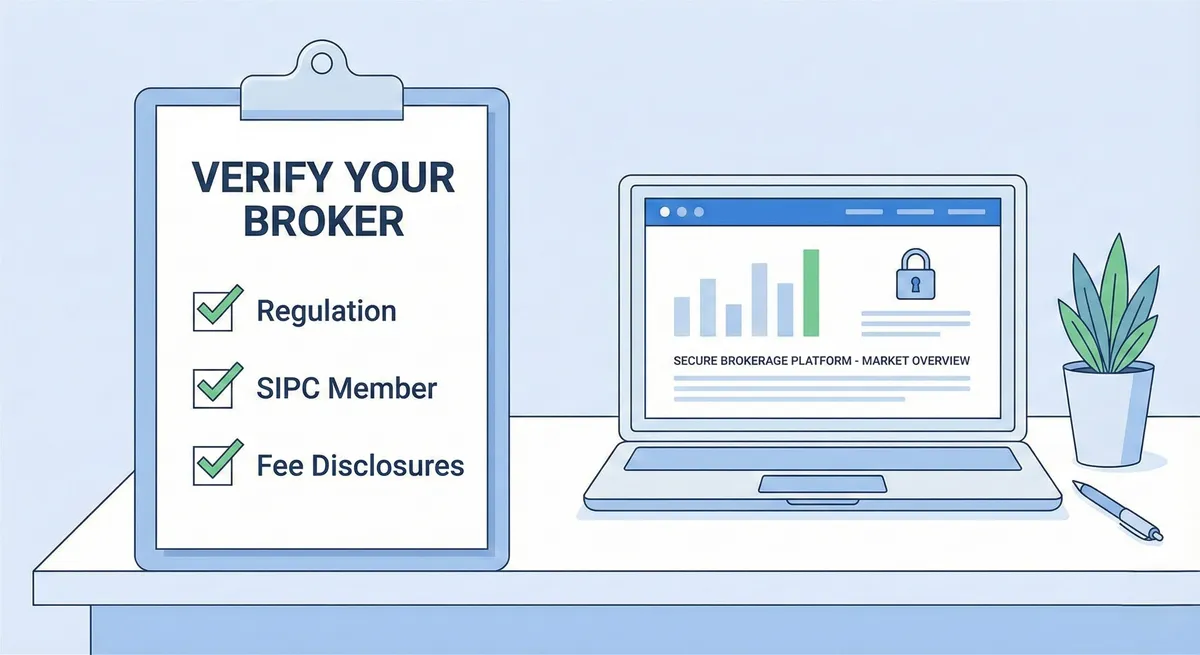
A practical “verify before you deposit” checklist
Before opening an account, confirm:
- The broker is properly regulated and transparent about policies
- Account security features exist (2FA, device approvals)
- Cash handling is clearly explained (especially cash sweep)
- Fee disclosures are easy to find and understandable
- Withdrawals are straightforward (no weird restrictions)
Red flags that should make you walk away
- Vague fee structures
- Hard-to-find legal pages
- Aggressive upsells into risky products
- Confusing withdrawal process
- No clear support channels
Simple security habits that prevent most problems
- Enable two-factor authentication
- Use a password manager
- Don’t reuse passwords
- Avoid logging in on public Wi-Fi
- Keep only the cash you need accessible; invest the rest based on your plan
The goal isn’t to find a “perfect” broker—it’s to pick a reputable one and operate with good habits.