How the Federal Funds Rate Affects You: Savings APY, CDs, Mortgages, and Credit Cards
When the Fed changes rates, the impact shows up in your everyday finances. Here’s what rises fast, what lags behind, and what smart households do in each rate environment.
The federal funds rate is not just “Wall Street news.” It’s a chain reaction that reaches your savings APY, CD yields, mortgage rates, and credit card APR. The key is that each product reacts at a different speed.
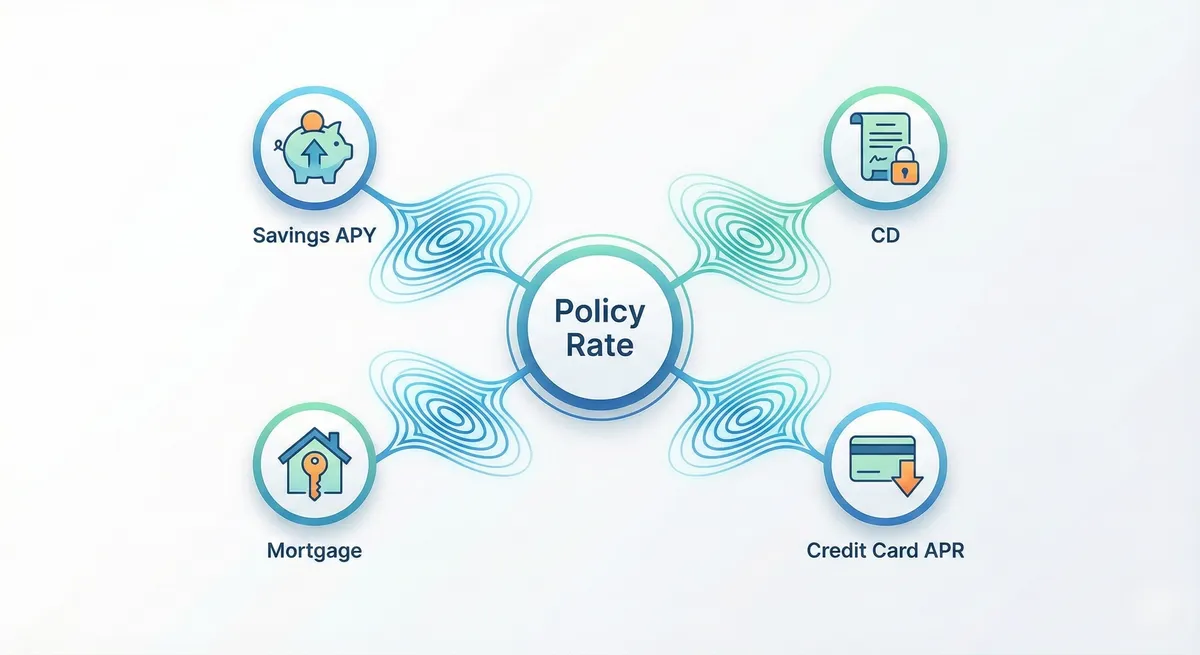
What Moves Fast vs. What Moves Slow
Sort products into “fast movers” and “slow movers,” and you’ll make better decisions with fewer surprises.
Fast Movers (Often Re-price Quickly)
- High-yield savings APY (especially online banks)
- Money market accounts and variable-rate deposit products
- HELOC rates (often tied to prime)
- Credit card APR (variable APRs typically adjust quickly)
Slower Movers (More Complex Pricing)
- Mortgage rates (driven heavily by long-term yields and expectations)
- Auto loans (promo cycles + lender appetite)
- Fixed-rate personal loans (credit risk + competition)
Savings Accounts: Use the “APY Competition” to Your Advantage
Savings APYs are strategic. Banks adjust not only based on policy, but also on competitor pricing and their own funding needs. That’s why it’s worth comparing: high-yield savings accounts and money market accounts.
CDs: Your Rate-Lock Tool
CDs become most attractive when you want certainty. Savings APY can change; a CD locks a yield for a term. If you want yield and access, consider laddering across multiple maturities so cash becomes available on a schedule.
Mortgages: Why They Don’t Track the Fed 1:1
Mortgage rates often move based on expectations and long-term bond yields. In practice:
- They can fall before policy cuts (markets price changes early).
- They can rise even when the Fed pauses (if inflation expectations jump).
Credit Cards: Variable APR Reality
Most credit cards have variable APR tied to a benchmark. When short-term rates rise, credit card APR usually follows quickly. When short-term rates fall, APR may come down — but it often remains high compared with secured debt.
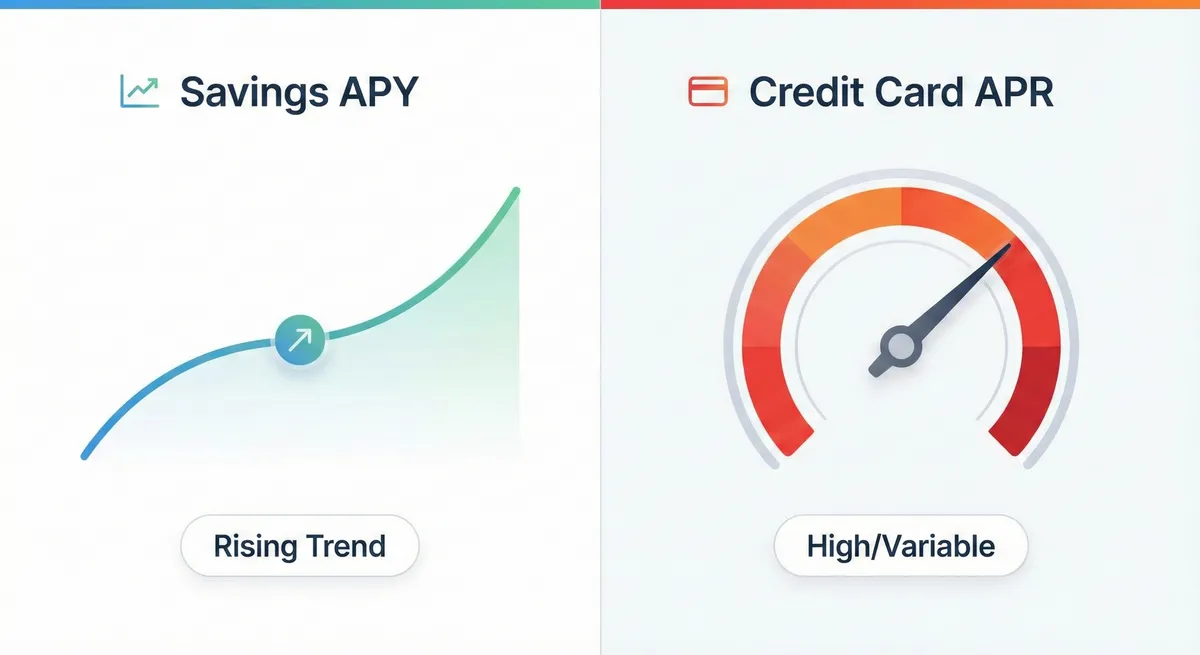
Action Plan: What to Do in Each Environment
If short-term rates are rising
- Prioritize paying down variable APR debt (credit cards, some HELOC balances).
- Keep emergency cash in competitive APY accounts; avoid locking too long if yields are still climbing.
- Use shorter-term CDs if you want some lock-in without long commitment.
If short-term rates are falling
- Consider locking yields with CDs (or ladders) if you won’t need the cash soon.
- Shop refinancing opportunities if long-term rates cooperate.
- Re-check deposit APYs periodically — banks often adjust in steps.
Bottom Line
Understanding what moves fast (savings, cards, HELOCs) versus slow (mortgages) helps you time decisions and keep more of your money.