Dealer Financing vs. Bank Loans: How to Negotiate the Best Rate
The dealership finance office is where they make their real profit. Learn the difference between 'Buy Rate' and 'Contract Rate,' and why walking in with a pre-approval letter is your strongest negotiation tool.

You've negotiated the price of the car, and you think the battle is over. Wrong. The real battle begins when you step into the "F&I" (Finance and Insurance) office. This is where dealerships make a significant portion of their profit, often by marking up the interest rate on your loan.
The Hidden Game: "Buy Rate" vs. "Contract Rate"
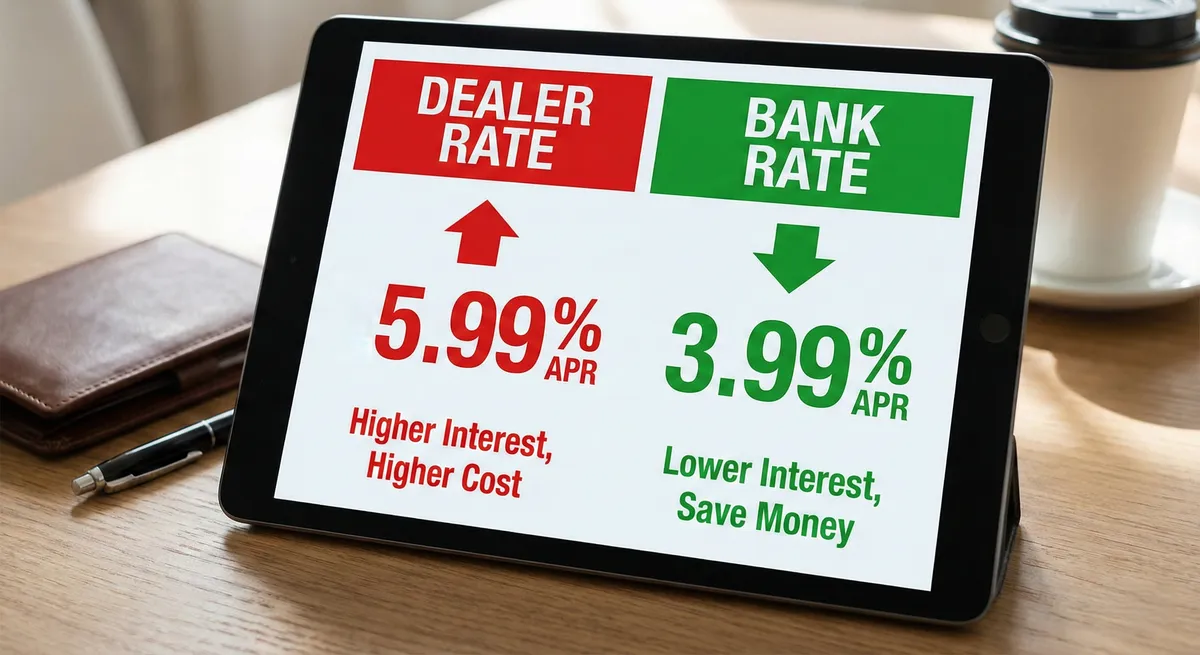
Most car buyers don't know that dealers act as middlemen for banks. When they run your credit, a bank might offer them a loan at 6% APR (this is the "Buy Rate"). However, the dealer might present you with a contract at 8% APR (the "Contract Rate").
That 2% difference goes into the dealer's pocket as profit. This practice is legal, but you don't have to accept it.
The Power of Pre-Approval
The single best way to avoid a markup is to walk into the dealership with a check in your hand. Before you even test drive:
- Apply for an auto loan at your local credit union or online bank.
- Get a "Pre-Approval Letter" stating your maximum amount and interest rate.
Strategy: Walk in and say: "I have 6.5% from my bank. Can you beat it?" This forces the dealer to compete.
0% APR Incentives: Are They Worth It?
Manufacturers may offer "0% APR for 60 months" to move inventory, but you may have to forfeit a cash rebate.
Always calculate total cost. Sometimes the rebate + bank loan is cheaper than 0% financing.
Regulatory Protection
Under TILA, the dealer must disclose:
- The APR
- Total finance charges
- Total sales price
Review these numbers carefully before signing anything.
Disclaimer: This guide is for educational purposes only and does not constitute financial advice.