How Credit Card Rewards Actually Work: Points, Miles, Cash Back, and Value
1 point is not always 1 cent. Learn how cash back, points, miles, transfer partners, and redemption rules determine your real value—and how to pick a rewards setup you’ll actually use.
Rewards cards sound simple: spend money, get value back. In practice, rewards are a pricing system with rules, categories, and “best use” redemptions.
This guide helps you understand:
- Cash back vs points vs miles
- Why “3x points” can be better (or worse) than “3% cash back”
- How to estimate your real rewards value

The 3 main rewards types
1) Cash back (the simplest)
- You earn a percentage of spending (1%–5% common in categories)
- Value is straightforward: $1 = $1
Best for: most people who want simple, predictable value.
2) Points (flexible, can be high value)
- “Points” are a currency. Their value depends on redemption.
- They can be used for travel, gift cards, statement credits, or transferred to partners.
Best for: people who will actually use redemption sweet spots.
3) Miles (often just points with travel branding)
- Many “miles” programs behave like points
- Value ranges based on where/how you redeem
Best for: frequent travelers (or people who love optimizing flights/hotels).
The truth about “point value”
A common baseline:
- 1 point ≈ 1 cent when redeemed as a statement credit (often the floor)
- >1 cent can be possible with travel portals or partner transfers
- <1 cent happens with bad redemptions (some gift cards, certain portals)
Quick mental model
Think of points like:
- Cash back = fixed exchange rate
- Points/miles = variable exchange rate
Categories: where rewards are won or lost
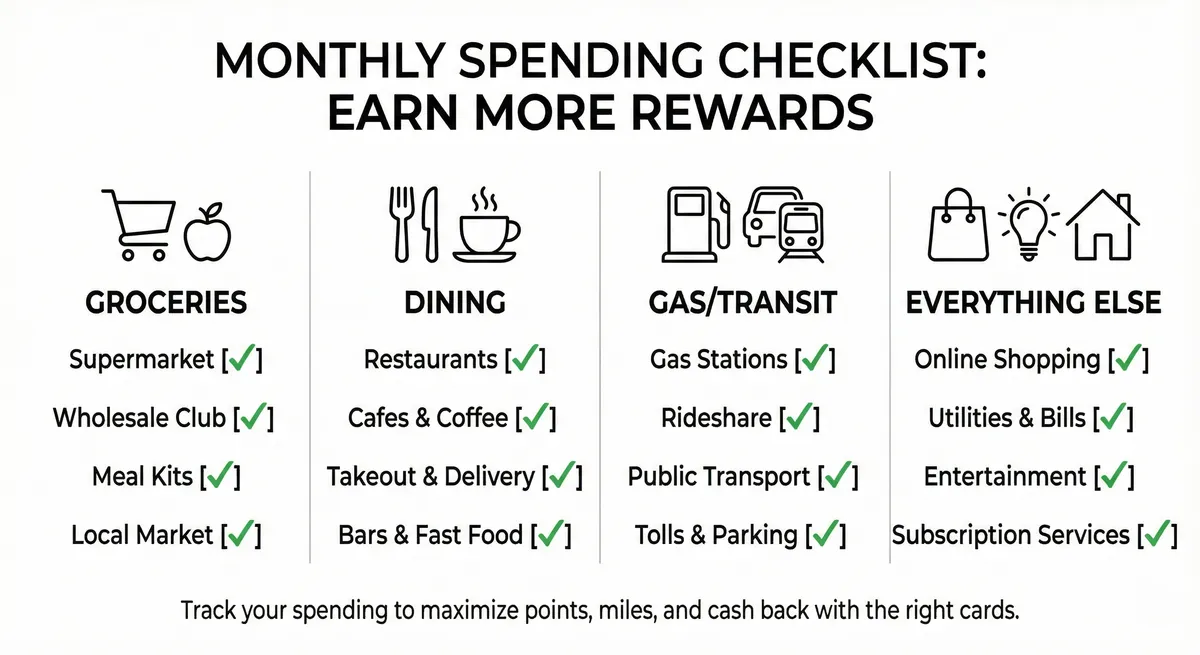
Most people don’t need 12 cards. You typically need coverage for:
- Groceries
- Gas / transit
- Dining
- Travel
- Everything else (catch-all)
The biggest mistake is picking a high “headline” offer you won’t use consistently.
A simple “real value” calculation you can use
Estimate yearly rewards:
- Write your monthly spend by category
- Multiply by reward rate
- Multiply by your realistic point value
Example (points card):
- Dining: $500/mo at 3x
- Points per year: $500 × 12 × 3 = 18,000 points
- If you redeem at 1 cent: value = $180/year
- If you redeem at 1.5 cents: value = $270/year
That difference is why some people love points—and why others should avoid them.
Sign-up bonuses: the real engine
For many rewards cards, the sign-up bonus can outweigh a year of normal spending rewards.
But it only counts as a win if:
- You can meet the spend requirement naturally
- You won’t carry a balance and pay interest
- The annual fee (if any) is justified
Transfer partners: when points get powerful
If a program allows transferring points to airlines/hotels, you may find redemptions that beat 1 cent/point.
But the trade-off is complexity:
- Award availability
- Transfer rules
- Travel dates flexibility
If you want “set it and forget it,” cash back is usually better.
Avoid these reward traps
- Overspending to earn points (the easiest way to lose money)
- Carrying interest (interest charges can erase rewards quickly)
- Complicated category rules you forget
- Rewards expiration (less common now, but still exists in some programs)
- Redemption friction (if it’s annoying, you won’t redeem)
A practical rewards setup for most people
- 1 card: 2% cash back on everything
- 1 card: 3%–5% in your top category (groceries or dining) Optional:
- a travel points card only if you travel enough to use it
If you never want to think about it again: choose cash back, automate payments, and keep it simple.