Balance Transfer Offers: The 0% APR Paydown Playbook (Fees, Timing, and Traps)
A balance transfer can stop interest and accelerate payoff, but transfer fees, promo windows, and spending habits determine whether it’s a real win. Here’s how to do it correctly.
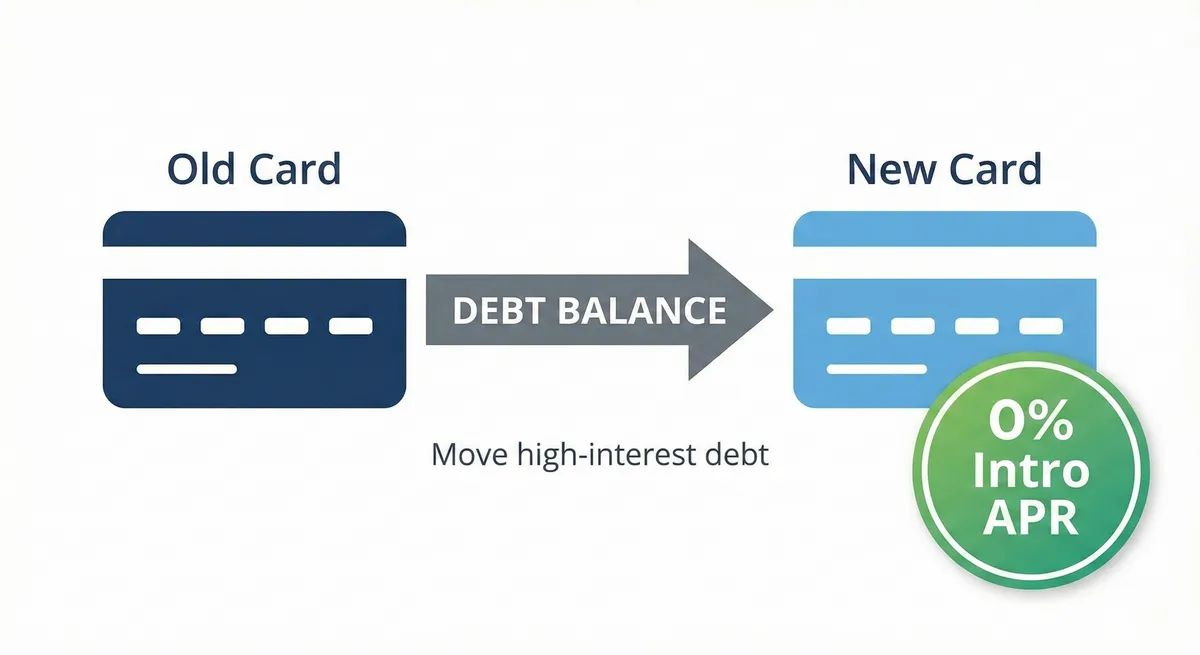
A balance transfer moves debt from a high-APR card to a new card—often with a 0% intro APR for a fixed period. Used correctly, it can save hundreds (or thousands) in interest. Used incorrectly, it can become a “pause button” that makes debt last longer.
Step 1: Know the real cost — the transfer fee
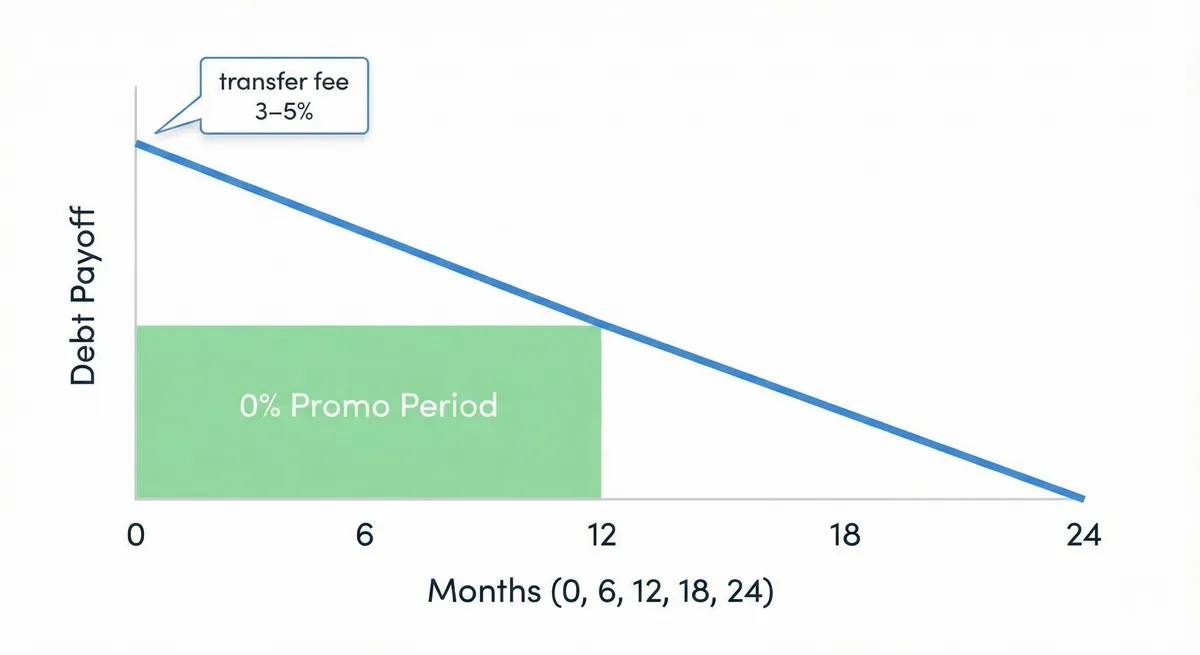
Most cards charge 3%–5% of the amount transferred.
Example:
- Transfer $8,000
- Fee 4% = $320 That fee can still be worth it if you’re escaping high interest.
Step 2: Build your payoff number (the one that matters)
Calculate the monthly payment required to finish inside the promo window:
Monthly payment = (Transferred balance + fee) ÷ promo months
Example:
- $8,000 balance + $320 fee = $8,320
- Promo: 16 months
- Payment target: $520/month
If that payment is unrealistic, the transfer may not solve the core issue.
Step 3: The “don’t make it worse” rules
Rule A: Stop new debt while you pay this down
If you keep spending on credit while transferring, you’re often digging a second hole.
Rule B: Don’t mix purchases with the transfer
Some issuers apply payments in ways that can leave purchases accruing interest. Best practice: Use the transfer card only for the transfer until paid off.
Rule C: Set autopay
A late payment can:
- end the promo APR
- trigger penalty APR
- damage your score
Step 4: Watch for these balance-transfer traps
Trap 1: Promo ends sooner than you think
The intro rate is time-limited. If you still have a balance after the promo, your APR can jump.
Trap 2: Transfer limits
You may not get a high enough credit limit to move all the debt. That’s normal.
Trap 3: “Transfer within X days”
Some offers require you to complete the transfer early (like within 60 days). Check terms.
Step 5: When balance transfers are most powerful
- You have stable income
- You can commit to a payoff plan
- Your existing APR is high
- You’re ready to stop revolving balances
Step 6: If you can’t pay it off inside the promo window
You have options:
- make bigger payments early (best)
- move leftover to a low-interest loan (sometimes)
- plan a second transfer (risky and not guaranteed)
- focus on income/expense changes to increase payoff
The simplest balance-transfer success plan
- Transfer the balance
- Divide by promo months
- Autopay that amount
- Freeze discretionary credit spending
- Celebrate when your interest hits $0
Balance transfers work best when you treat them like a deadline—not a delay.